San Antonio Addiction Treatment: Family Education Workshops That Assistance
Families do not cause addiction, and they can not cure it. Yet a family members can come to be the most constant, maintaining force around somebody that is battling, and the difference in between mayhem and constant progress frequently boils down to education and learning and practice. In San Antonio, family education workshops connected to addiction treatment offer both. They demystify what is occurring in the brain, they educate concrete interaction abilities, and they connect relatives with local resources that maintain everybody much safer and even more resilient.
I have actually sat in spaces on the North Side and the South Side where grandparents, armed forces partners, and adult kids shared one thing in common: they desired a plan. Not a lecture, a strategy. The most helpful workshops provide that, piece by item, without embarassment or faster ways. This article discusses what solid programs in San Antonio resemble, what families can expect to learn, and how to select a workshop that really relocates the needle.
What a household workshop really is, and what it is not
Family education in addiction treatment is a series of organized classes and assisted discussions that run together with a liked one's treatment. Some programs satisfy when a week in the evening for 8 to ten weeks, others condense the web content right into a weekend intensive, and several now assimilate telehealth sessions for out of town family members. The goal is not to turn you into a medical professional. The aim is to help you recognize the pressures at play, reduce purposeless patterns at home, and give you repeatable tools for support.
A good facilitator will certainly establish guideline, safeguard privacy, and maintain the concentrate on what family members can control. That indicates you will hear the expression you can just transform your side of the road. It can be disconcerting initially. Many individuals get here wanting to discover exactly how to obtain their enjoyed one to quit. The workshop will certainly invest even more time on how to minimize the rubbing, incentive much healthier actions, and hold a boundary without screaming or cold shoulder. That change, from control to influence, is the point.
Good family members programs are not spectator sports. They are not slideshow marathons. They ask you to exercise brand-new language aloud, to create a short limit statement, and to commit to a little adjustment between sessions. And if a workshop is mainly a pile of handouts with little technique or feedback, maintain looking.
The core topics that in fact change outcomes
Every program organizes its curriculum in a different way, however the most effective ones in San Antonio reliably cover a core collection of skills and facts.
First, the scientific research . Expect to find out how materials hijack reward pathways, why resistance and withdrawal make determination an unjust procedure, and what very early healing does to sleep, emotions, and focus. When a father comprehends that his child's sprints of irritation are part of dopamine normalization and not an individual strike, arguments hand over promptly. Details like this does not excuse hurtful habits, it structures it so you can react effectively.
Second, useful communication. Households learn to stay clear of cross assessment and why long talks seldom stick. They practice making use of short, specific statements linked to visible actions. They discover what positive reinforcement resembles for grownups, not kids. A sibling that drops the all or nothing technique and starts reinforcing little success, like 3 days of showing up to outpatient groups, often sees even more involvement. The workshop will show variations of the CRAFT strategy, which uses positive support, intended requests, and good timing instead of confrontation.
Third, boundaries and safety and security. Benchmarked borders are concrete and enforceable, like not keeping cash money in the house or securing auto secrets after 10 pm. A workshop must show how to set a limit, state it when, and follow through without intensifying. This is where lots of family members recognize they have actually been making threats they can not apply. Switching to simpler restrictions that you regulate takes the heat out of the room and safeguards relationships.
Fourth, relapse threat and situation planning. People agree on warning signs, like vanishing for hours after cash advances or avoiding therapy two sessions in a row. They rehearse what to do when a warning sign turns up, including who to call, where to go, and who keeps the insurance policy card. A situation is not the time to create a strategy. You construct it in class so you can act faster later.
Fifth, drugs and carbon monoxide happening concerns. In San Antonio, many programs include education on medications for opioid, alcohol, and nicotine use disorders, along with antidepressants and mood stabilizers that might be part of a wider care strategy. Family members hear what these medications do and do refrain from doing, the predicted negative effects, and the risks of stopping instantly. They additionally find out to expect depression, anxiety, trauma signs, and ADHD characteristics that frequently sit under the surface area and make complex recovery.
Sixth, systems and logistics. Workshops that offer the city well discuss insurance policy realities in Texas, transportation to centers on bus lines, and what paperwork employers legally can and can not ask for in a sabbatical. They also supply regional source maps, from peer healing teams to confidence based supports to affordable counseling for family members members.
When programs cover these locations with instances and function plays, we see measurable changes. Retention in therapy enhances when families recognize how to motivate participation and what to do when inspiration dips. People re get in care quicker after slips because the family members currently has a re entrance strategy. Those are not magic techniques, just the collective result of doing little points on purpose.
A week inside a San Antonio workshop
Here is what a common week resembles for families going to a program that runs together with addiction treatment in San Antonio.
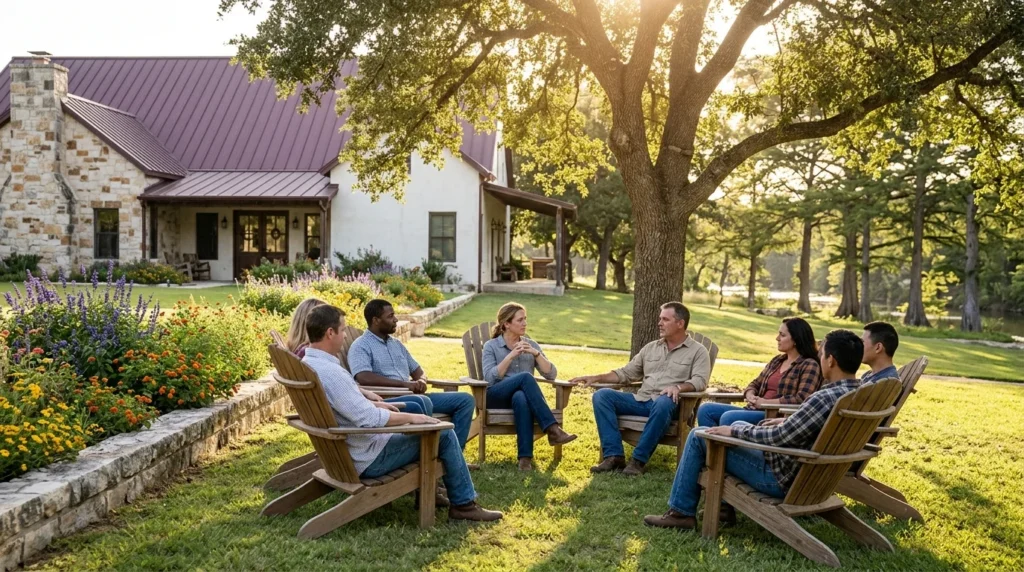
On Tuesday night, a mixed group gathers in a class near the clinical center. A Navy expert's partner sits beside a Tía that drove in southern Side. A bilingual facilitator opens with a quick testimonial and checks in on recently's technique project. One pair saw they were arguing much less once they switched over to much shorter, accurate statements. One more moms and dad admits they tried to establish 3 new policies at once and it backfired. The course reworks those right into one limit the parent can impose today.
Midway via, the facilitator instructs a short sector on yearnings and cues, after that relocates right into method. Households pair to rehearse a request for an enjoyed one to go to a Saturday support meeting, with focus to timing and tone. Somebody laughs, somebody tears up. Individuals entrust one details action for the week, plus a handout in English and Spanish.
On Saturday early morning, a different area runs a two hour session on relapse prevention. A situation manager from the program's outpatient facility signs up with to describe how to fast track re evaluation after a lapse. Households save the straight number and learn the distinction in between a management discharge and a healing action down. Time is alloted to fill out a crisis plan worksheet. Not concept, logistics.
Even where the schedule flexes, solid programs equilibrium education with practice session and leave family members with a little, manageable assignment.
What aids versus what mistakenly harms
In workshops across the city, among the very first jobs is mapping what member of the family are doing now and arranging the valuable from the harmful, without judgment. Enabling is not a character flaw. It is a desperate effort to maintain a person safe in the short term. The issue is that short term repairs can hinder long-term change.
A grandmother who pays repeated penalties and changes damaged phones typically believes she is protecting against worse outcomes. And occasionally she is. However if those saves are automated, they get rid of natural feedback. In class, we aid her make a decision when to step back and when to step in. A ride to therapy is support. Changing a phone shattered during a binge is commonly enabling. The line is not always clear, so the workshop provides her a decision device: ask whether the action makes proceeded usage less complicated or makes healing actions much easier. If the answer is the former, seek an option that maintains safety without smoothing the course to more use.
Families additionally learn not to blunder silence for peace. Avoiding the topic completely types animosity and uncertainty. On the various other hand, a day-to-day interrogation seldom motivates. The workshop helps loved ones locate a consistent cadence, like an once a week sign in on how treatment is going and what support the person really desires today. Foreseeable, brief, respectful.
Myths the workshop will certainly dismantle
Common misconceptions appear all over. One is that difficult love implies cutting somebody off completely. In some cases splitting up is essential for safety and security, yet the majority of the moment challenging love means clear, constant borders with warm connection. One more is that treatment just functions if the individual hits base. In San Antonio, clinicians see much better end results when people go into treatment prior to disastrous losses, frequently nudged by family members who enhanced tiny enhancements and urged following steps.
Another misconception is that medicines replace one addiction with one more. Medications for opioid or alcohol utilize condition do not provide a high when taken as suggested. They lower cravings and shield versus overdose or relapse. The workshop will offer you language to answer apprehension from loved ones or church friends that worry medication signals weak point. It does not. It signifies a clinical condition took care of with clinical tools.
Finally, people worry that talking about relapse invites it. Data and experience claim or else. Naming triggers and developing a strategy minimize embarassment and rate re engagement with care. Silence, by comparison, makes a slip more probable to spiral.
The neighborhood fit: why San Antonio context matters
San Antonio's mix of cultures, languages, and occupations forms what family members need from education. A program that thrives right here pays attention to those textures.
Many homes consist of active service solution participants, reservists, or veterans. That indicates the workshop should explain TRICARE reference patterns, privacy limits in command routed counseling, and what a cozy handoff from residential care to a VA clinic resembles. Armed forces families likewise gain from skill structure around reintegration after deployments, since shifts in regimen can spike anxiety for every person involved.
Hispanic and Latino families typically bring solid intergenerational connections and confidence practices to the table. A culturally aware workshop welcomes those assistances. It supplies bilingual products, welcomes a family member to equate jargon in group if required, and values the duty of pastors or ordinary leaders. At the same time, the facilitator ought to help families navigate when social assumptions around regard and privacy get in the way of honest talk about usage and mental wellness. This is not regarding transforming values, it has to do with aligning them with healing tasks.
Transportation issues. If the only family members sessions take place throughout town during heavy traffic, participation declines. Excellent San Antonio programs routine at least one evening session on a bus line, and some provide digital alternatives for loved ones in the Eagle Ford or out of state. Childcare is not common yet a handful of service providers companion with recreation center to make it feasible. Ask about it.

Paying for household education and learning in Texas
Insurance protection for family education and learning linked to addiction treatment varies. Lots of commercial plans in Texas include family members programs when it becomes part of a covered episode of care. TRICARE frequently licenses household solutions during certain levels of treatment, especially intensive outpatient or residential. Some state moneyed service providers supported by Texas Health and Human Solutions Commission run open family members education nights at no cost, though offerings shift year to year and space can be limited.
If your loved one is not in formal therapy, you still have alternatives. A number of centers in San Antonio allow family members registration in education and learning collection even when the recognized client is not yet in care. Costs vary extensively, so inquire about moving scales, scholarships, and whether presence counts as part of your loved one's treatment goals, which might affect insurance.
For payment, be prepared to hear the alphabet soup of CPT codes and medical diagnoses. It is fine to ask the supplier to explain what is billable and what is not. You can likewise ask for that your engagement be noted in your loved one's treatment plan. That documentation often aids with insurance coverage or work environment leave.
How to choose a workshop that works
Here is a fast checklist to help you evaluate programs before you commit.
- Ask what the educational program covers and just how much time is spent practicing communication, boundaries, and situation planning, not just lecture.
- Confirm whether the program uses multilingual sessions or products and if they invite extended family.
- Find out what happens after the workshop finishes, consisting of graduates teams, recommendations to family members counseling, and links to shared help like Al Anon or SMART Household and Friends.
- Clarify attendance alternatives for out of community relatives, consisting of video clip access and whether those individuals can talk during groups.
- Request names and credentials of facilitators, and how they train staff in approaches like CRAFT or motivational interviewing.
If a program can not answer those concerns clearly, keep looking. Solid centers will certainly walk you via how they support family members step by step.
The first session: what it really feels like
People frequently turn up to the first night with crossed arms and limited jaws. They are tired of being condemned or disregarded. A knowledgeable facilitator begins by stabilizing that tension. You could be asked to present on your own by first name and relationship, absolutely nothing even more. The guidelines of the space will be easy: maintain tales confidential, speak for yourself, and stay clear of advice providing unless a person requests for it.
There will likely be a quick introduction of substance usage problems that avoids moralizing. Then comes a brief workout, like rewording a typical battle into a clear boundary and a certain request. For example, as opposed to you never ever keep your word, a moms and dad might practice we will not offer cash. If you want to make use of the automobile this week, reveal 3 days of meeting attendance. The assignment for the week will be little. Attempt one new manuscript as soon as, after that record back.
If you choose not to speak much initially, allow the facilitator recognize prior to team starts. They can sign in with you silently and assist you participate without sensation exposed.
A few short scripts you can start using
Useful language specifies, considerate, and connected to actions you can see. Attempt these in everyday conversations and adjust to your own voice.
- I care about you, and I am not saying about whether you have an issue. I am asking you to attempt three outpatient groups today. If you go, I will certainly see the kids Tuesday and Thursday.
- I will certainly not offer money. If you require grocery stores, we can shop with each other on Saturday. If you make use of, the vehicle remains below that night.
- I discovered you returned on schedule 3 nights today. I value that. Do you desire a trip to your consultation tomorrow or do you have it covered?
These are not magic words. They are examples of just how to match warmth with a clear ask or a clear limit.
When the household is split or much away
One of the hardest characteristics in addiction treatment is when loved ones disagree regarding the issue and the strategy. Workshops anticipate this. Facilitators encourage a smallest common measure strategy. Even if one brother or sister declines to call it addiction, most can agree that late night driving after drinking is dangerous. Construct a border around that common issue. With time, as the group sees small renovations, purchase in grows.
Distance is solvable. Numerous San Antonio programs currently enable at least one about call in through video. If your own does not, request for tape-recorded lectures and a short phone get in touch with to go through the practice job. Many clinicians will certainly make that happen if you ask early.
Safety, domestic violence, and difficult lines
Family education does not get rid of serious risks. If there is residential physical violence in the home, your initial phone call is a safety and security plan, not a communication script. Excellent workshops make area for this and will attach you with neighborhood shelters, legal help, and confidential advocates. When instant risk is present, instructors will certainly press time out on specific workouts and change to safety steps only.
Legal concerns emerge too. If a loved one is driving intoxicated, you will be asked to write a https://paxtonwuhl650.novacrestiq.com/posts/addiction-treatment-texas-damage-reduction-approaches-explained limit that safeguards the public, not just your household. That might indicate protecting cars and truck tricks in the house or calling police in severe circumstances. It is painful. It is also sometimes the activity that prevents a misfortune. No facilitator must press you one method or the other, however they will certainly stroll you with the dangers so you can make a decision with clear eyes.
Measuring progress that family members can feel
You can not regulate the trajectory of an additional grownup. You can measure whether domesticity is getting more secure and much more stable. Workshop facilitators commonly motivate about track a few metrics each week.
Missed disagreements is a remarkably valuable one. If you go from 5 blowups a week to 2, that is progress. Nights of nonstop rest is one more. So is the number of times you enhanced a little win. Some households maintain a basic graph on the fridge. Others jot notes in a phone. The method matters much less than the behavior. When you see even small improvements, you are more likely to keep doing the behaviors that create them.
For the person in therapy, you might see participation, conclusion of homework, and whether they go back to care rapidly after a lapse. The goal is not a perfect touch. It is much faster recovery after stumbles and a home atmosphere that supports ongoing care.
After the workshop ends
Graduation needs to not feel like a cliff. The best programs in San Antonio offer alumni sign in once a month or a re entrance option where family members can go down right into a single session for a tune up. Many urge families to mix formal treatment with neighborhood sustains. Al Anon and Nar Anon meetings continue to be constant anchors for a great deal of relatives. SMART Healing's Family members and Pals teams, available online and in some Texas cities, teach interaction and border abilities that line up well with what you learned in workshop. Confidence areas can become part of the aftercare strategy too, specifically when leaders have training in substance use and psychological health.
It deserves booking at least one individual counseling session for yourself also. Workshops are effective, but some family members patterns and sorrow need one on one attention. If you feel guilty tipping far from the battle to take care of on your own, say that aloud in the team. Others will nod. Self care in this context is not a motto. It is just how you remain steady sufficient to maintain revealing up.
A brief word on the larger picture
Addiction therapy in San Antonio, and throughout Texas, is developing. Even more centers identify that family involvement is not an add on, it belongs to the therapy. Programs that partner with family members see fewer missed out on visits, smoother shifts in between degrees of treatment, and better alignment between home life and scientific objectives. Those gains originate from hundreds of tiny steps that family members discover and repeat.
If you read this while balancing work, kids, and the roller coaster of somebody else's use, it may seem like one more demand to include a workshop. From experience, the moment you invest discovering the skills pays you back in calmer weeks, less crises, and more moments of connection with the individual you like. Search for a program that appreciates your culture, your timetable, and your limits. Ask tough questions in advance. After that take the very first session and see if the room feels right. The appropriate workshop does not make recuperation easy. It makes it feasible to navigate together with less damages and even more hope.
Families in this city bring grit, wit, and commitment to the job. When those high qualities meet clear information and functional tools, people improve. Not at one time, not without troubles, but steadily. That is what an excellent family education and learning workshop supplies, and it is why it belongs at the facility of addiction treatment in San Antonio.